Showing posts with label Marketing. Show all posts

Saturday, 17 November 2012

What companies opposed or supported Prop 37 (GMO labelling)

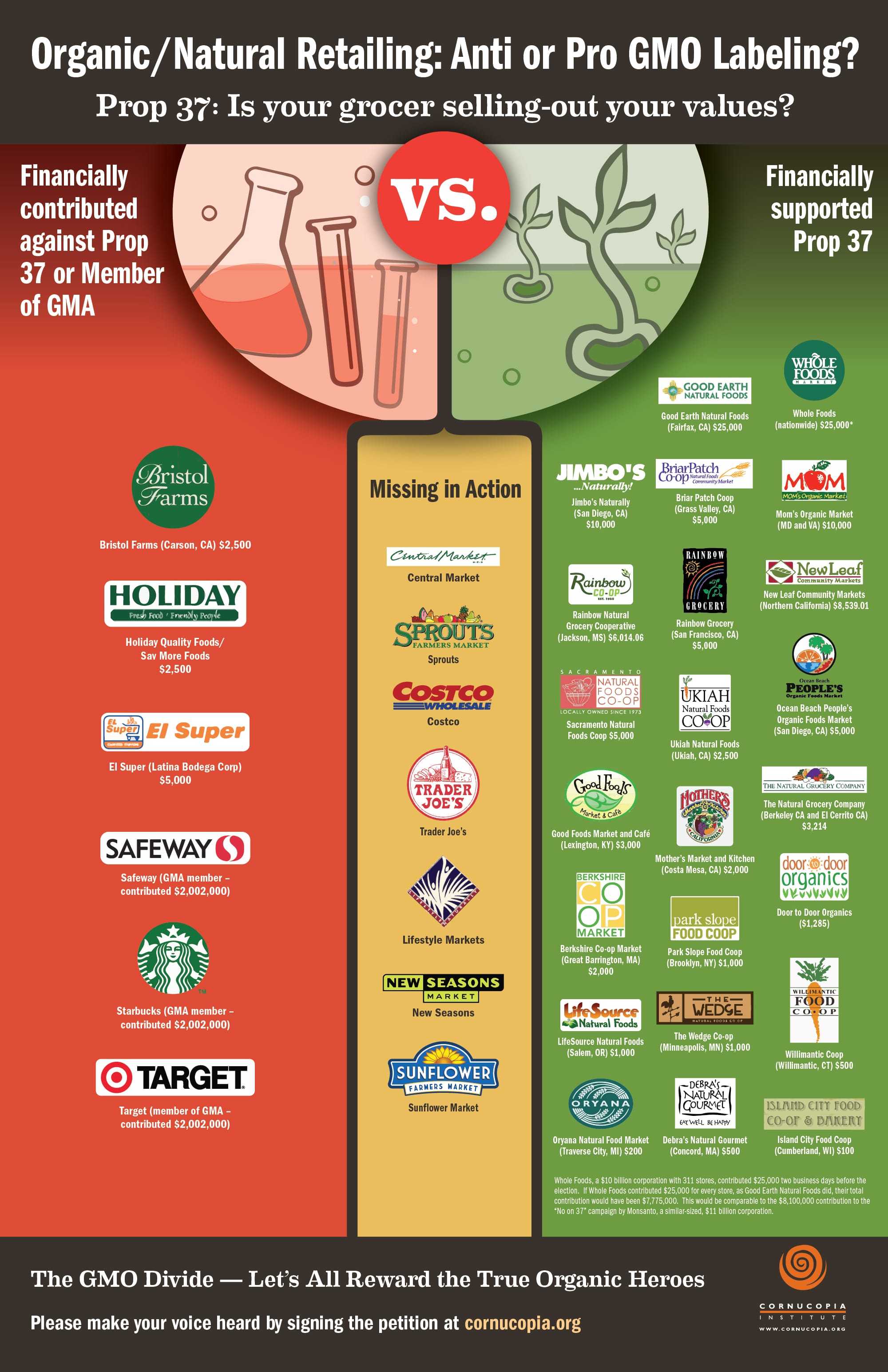
The Cornucopia Institute put together a great visual of the corporations and grocers that didn't support Proposition 37 (are against labelling GMOs), and those that did.
Which companies will you support?



Monday, 27 August 2012

Rethinking the science of hydration

True or False?

  • Thirst is not a reliable gauge of a body's need for water
  • Urine colour is a reliable gauge of hydration (dark=dehydrated; light = well hydrated)
  • It is better to rehydrate with a sports drink after exercise than with water
  • We should weigh ourselves before exercise, and after. We must then drink enough fluid to make up for that weight loss to ensure complete rehydration 
  • Exercise-induced hyponatremia (low blood sodium) or electrolyte imbalances can be prevented (or avoided) by  drinking a sports drink during and/or after exercise rather than just water
  • People get sick and/or collapse due to dehydration during sporting events where fluid is provided. 

 I would have answered 'true' to most, if not all, of these statements. In fact, I learned that many of these statements are true in school. However, last month, BMJ published The truth about sports drinks that shed some light on the science behind dehydration and sports beverages. 

The article describes clever marketing tactics on the part of the sports drink industry, including providing funding to scientists and science journals. For example, they reveal that Medicine and Science in Sport and Exercise, one of the leading sport medicine and exercise science journals,  is owned by the American College of Sports Medicine that has financial ties to Gatorade and Powerade. Many of the editors on the editorial board have (and have had) ties with sports drink companies. 

The article explains that this marketing, and hijacking of the science of hydration, has undermined our confidence in our own thirst mechanisms. 'They' have us believe that our bodies are unable to tell us when we're thirsty; that not drinking enough before, during or after exercise, can make us very sick ; that rehydrating only with water rather than a sports drink can cause the potentially fatal hyponatremia. 

However, according to this article, there is no evidence that anybody has ever gotten ill due to dehydration during a sporting event when fluid was available. That is because our bodies tell us when it's thirsty, and we drink to satisfy our thirst. 
Simple as that. 
The article also explains that overhydration can lead to electrolyte imbalances and is potentially very dangerous, but can occur by drinking sports drinks just as it can by drinking too much water. 

I highly suggest you read the article- it's definitely interesting. 

Here's a bit more from Professor Tim Noakes, Discovery health chair of exercise and sports science at Cape Town University:


Thank you, Umang!

Thursday, 5 April 2012

Who's the largest toy distributor in the world?

You'll never guess.
According to Frugal Dad, McDonald's is the world's largest toy distributor, giving out more toys annually than Toys R Us!

Here are a few more interesting stats on the fast food chain.

"(The) infographic lays out some of the details of the recent San Francisco Healthy Food Ordinance, and it also explores some of the facts behind how McDonald’s has become such a popular chain with children".


mcdonalds

Source: http://frugaldad.com

Thanks Beth!


Saturday, 18 February 2012

Occupy the Food System

In December, Willie Nelson, President of Farm Aid, wrote an amazing piece for the Huffington Post. In it, he points out how concentrated the agricultural market is- a very small number of firms control the majority of the market, threatening competition and resulting in market abuses:

93% of soybeans and 80% of corn grown in the United States are under the control of Monsanto; four companies control up to 90% of the global trade in grain; 3 companies process more than 70% of beef in the U.S.; 4 companies dominate close to 60 % of the pork and chicken markets.

Nelson gives example of the power these large corporations have, overturning GIPSA in the US - proposed fair market contract rules under Grain Inspection, Packers and Stockyards Administration that would have made it illegal for packers and slaughter houses to unfairly discriminate against independent farmers - and using $5.6 million in lobbying costs to overturn US Department of Agriculture rules that would have changed the standards for school lunches to reduce the amounts of starch and sodium and increase the amounts of fresh fruits and vegetables.

He e
nds:
Despite all they're up against, family farmers persevere. Each and every day they work to sustain a better alternative -- an agricultural system that guarantees farmers a fair living, strengthens our communities, protects our natural resources and delivers good food for all. Nothing is more important than the food we eat and the family farmers who grow it. Corporate control of our food system has led to the loss of millions of family farmers, destruction of our soil, pollution of our water and health epidemics of obesity and diabetes.

We simply can't afford it. Our food system belongs in the hands of many family farmers, not under the control of a handful of corporations.

"We are farmers, we grow food for the people"


In March 2011, the Public Patent Foundation filed the landmark lawsuit, Organic Seed Growers and Trade Association (OSGATA) et al v. Monsanto on behalf of family farmers, seed businesses and farming organizations to challenge Monsanto’s patents on genetically modified (GMO) seeds and protect farmers from the biotech seed and chemical giant’s abusive patent infringement lawsuits.

At the heart
of the lawsuit is the threat that farmers face due to genetic trespass as a result of Monsanto’s GMO seed and the aggressive enforcement of their alleged patent rights.


I stand with Farmers vs. Monsanto


After hearing
the arguments, Judge Naomi Buckwald stated that on March 31st she will hand down her decision on whether the lawsuit will move forward to trial.

For more information and how to get involved, visit Food Democracy Now!

"Back to the Start"

Willie Nelson
teamed up with Chipotle to release this ad against factory farming and for sustainable agriculture. Download the song from itunes- proceeds go to the Chipotle Cultivate Foundation.

Friday, 12 November 2010

Would you eat 16 packs of sugar?

The New York City Department of Health and Mental Hygiene have done it again...

Remember the Drinking Yourself Fat campaign that told us that "drinking 1 can of soda a day can make you 10 pounds fatter"?

Their new ad asks:

Would you eat 16 packs of sugar?


Thomas Farley, New York City Health Commissioner, hopes “that this campaign will encourage people to consider healthier alternatives to sugary drinks... Even small changes can have real health benefits.”

Thursday, 27 May 2010

Mobile Cupcakes

What will they think of next?!
I saw this on my last visit to New York City:

Monday, 10 May 2010

Stay in the Game... Check Your Balls!

Testicular cancer accounts for a small % of all cancers in Canada- only 1.1% . However, in 2006, the Public Health Agency of Canada reported that steadily increasing rates were alarming; in the last 3 decades alone, incidence has increased by 59%. Testicular cancer is often referred to as a young man's disease and is currently the most common type of cancer, and leading cause of cancer death, in men in their 20s and 30s!

Because men in the at-risk age-group remain largely unaware of testicular cancer, its symptoms, the importance of TSE, and the role of early detection on survival rates, I developed a Social Marketing Campaign and Public Service Announcement (PSA) for an assignment. Thought I'd share my PSA with you (Thanks for your help guys!). (The website on the PSA doesn't really exist).


What causes testicular cancer?

It's not well understood what causes testicular cancer, but risk factors include a family history, cryptorchidism (undescended testicle), previous testicular cancer, age (15-49 years old), and race (incidence is 4 times higher in Caucasians than African American, for example). Nonetheless, many men will develop testicular cancer without any of these risk factors.


Testicular Self Exams (TSE)

Testicular cancer is one of the most curable types of cancer when detected before it has spread (the cure rate is 99%). So, testicular self examination (TSE) would be the obvious recommendation.

Controversy:

Recommending TSEs is still a bit controversial- critics state that population-wide recommendations shouldn't be made until it can be proven that TSE reduces mortality. Given the low incidence though, this is probably not possible.

Both the American Cancer Society and the Canadian Cancer Society suggest that early detection can improve treatment and recommend that TSE be part of regular routine medical exams. However, research shows that not all health care providers perform testicular exams, or even talk to their patients about performing TSE. Moreover, men tend to delay going to the doctor, possibly delaying early diagnosis. Half of testicular cancer patients are currently diagnosed in advanced stages.

Other critics state that recommending regular TSEs would lead to a number of false-positive results, resulting in patient anxiety. This, however, has been refuted, and TSEs have been reported to be highly effective and sensitive in cancer detection.

How to Perform a TSE

According to the Testicular Cancer Resource Centre, and the Sean Kimerling Testicular Cancer Foundation, self exams should ideally be done once a month, either in front of a mirror after a warm shower, or in the shower - the warm water relaxes the skin of the scrotum. The thorough exam should take about 3 minutes.

Gently examine each testicle with both han
ds.

Place your index and middle finger under the testicle with the thumb on top. Gently roll the testicle between your thumb and fingers. You shouldn't feel any pain. It's normal for one testicle to feel a bit larger than the other.

Find the epididymis, a soft, tube-like structure behind the testicle that collects and carries sperm- once you're familiar with this structure, you won't mistake it for a suspicious lump. Cancerous lumps are usually found on the sides of the testicle but can also show up on the front.

What to Look For

See a doctor as soon as possible if you:


Have any pain in your testicles or scrotum.
Detect any hard lumps, nodules (smooth rounded masses), or abnormalities
Notice any swelling
Detect a significant loss of size in one testicle
Detect a significant enlargement of a testicle
Feel a dull ache in your lower abdomen or groin
Feel heaviness in the scrotum
Notice collection of fluid in the scrotum
Have pain or discomfort of the breasts.

When in doubt, see a doctor.

For more information:


http://www.tctca.org/
http://www.seankimerling.org/index.php/self-exam
http://tcrc.acor.org/tcexam.html

And for great PSAs!
http://www.carpetestes.org/


Monday, 5 April 2010

Time for Ronald to Retire!


If you're against the use of a clown character to encourage kids, and their parents, to eat fast food, sign the petition to Retire Ronald McDonald... it only takes a few seconds... and it's about time.

This initiative comes from Corporate Accountability International.

Click here to visit the website to sign the petition and learn more.

Click here to send a letter to McDonald's CEO, James Skinner, via the Center for Science in the Public Interest.

(I did both!)

Here's part of the Press Release:

After close to fifty years of hawking fatty food directly to kids, Ronald McDonald is being urged to retire.

The findings come amid growing recognition of the fast food industry’s primary role in driving the epidemic of childhood obesity and diet-related disease.

“This clown is no friend to our children or their health,” said Senior Organizer Deborah Lapidus of Corporate Accountability International. “No icon has ever been more effective in hooking kids on a harmful product. Kids have become more obese and less healthy on his watch. He’s a deep-fried Joe Camel for the 21st Century. He deserves a break, and so do our kids.”

For poll results, an analysis of Ronald McDonald’s pervasive presence on the American landscape, a background on the psychology behind children’s marketing and more visit www.RetireRonald.org.

Tuesday, 16 February 2010

Eat More Fast Food!


This was a poster I created for a course... thought I'd share it!! :)

It was a visual imagery assignment- we had to create something visual (max 8 words) to express a nutrition recommendation/message for a specific population.

The population I chose were parents (that feed their kids fast food).

Monday, 8 February 2010

Can the Message be Separated From the Source?

Have you seen Dove's Campaign for Real Beauty? Their message is a great one- it challenges the beauty ideals set by society and shows that beauty comes in different shapes, sizes and ages.
But critics point out that the campaign is used to sell products- including firming and anti-aging creams. So really, Dove's just upholding the beauty ideals that they claim to be against....


Dove's parent company, Unilever, also owns Axe- a male hygiene product line. Axe ads don't really use "real women"...
But, does this take away from the Real Beauty Campaign message?

Glamour magazine got quite a bit of attention for featuring an untouched (gasp!) photograph of a "plus-sized model". Other magazines have since followed suit, leading us to wonder what their motivation really is...
But even if their motivation is the bottom line ($$), does it matter if what they're doing is positive?

Now what about if a health agency, like Dietitians of Canada or the American Dietetic Association- organizations that represent dietitians and provide evidence-based nutrition information to the public- were funded by food industry?
Does their message lose its credibility? Do dietitians lose their credibility?

I'm not a member of Dietitians of Canada (DC) (it's not mandatory), but I know that members receive a large amount of industry-sponsored stuff, including from dairy, beef, and egg producers, etc etc. Some of their resources are also sponsored...

I was asked to help organize a career day at my university for dietetic interns a few months ago, but turned it down after learning that the event was entirely funded by big food industry companies (the majority of the speakers represented these companies too). It just made me uncomfortable...

Some dietitians I spoke to brought up the point that that many universities are funded by industry (tobacco, oil, etc)... but this fact doesn't invalidate our education...
They also said that a lot of good work can be done within industry... that the work is not necessarily affected by the funding.

Marion Nestle, a very well-respected dietitian, author and professor, called out the American Dietetic Association (ADA) for their associations with industry (which include Coca-Cola and Pepsi!), stating that it does taint their message.

This is a letter she wrote on her blog to ADA members.

"Respected ADA colleagues: as long as your organization partners with makers of food and beverage products, its opinions about diet and health will never be believed independent (translation: based on science not politics) and neither will yours. Consider the ADA’s Nutrition Fact Sheets, for example, each with its very own corporate sponsor (scroll down to the lower right hand corner of the second page to see who paid for the Facts). Is the goal of ADA really the same as the goal of the sponsors–to sell the sponsor’s food products? Is this a good way to get important scientific messages to the public? ADA members: how about doing something about this!"

Click here for part of the ADA's response which basically states that they don't have a lot of money and corporate funding allows them provide members and the public with educational programs.

What do you think?

Can you trust resources (including the food guide) or messages that come from an organization that's funded by certain food industries?

If you're a dietitian, how do you feel about the organizations that represent you partnering with food industry?

(Of course, the dietetic profession isn't the only organization that receives corporate sponsorship- think of the medial profession receiving money from pharmaceutical companies... even the Olympics are sponsored by McDonald's and Coca-Cola...).


Sunday, 7 February 2010

Broccoli :The Miracle Food... Another commercial!

So, I still don't know who's behind these ads (I did email them... never heard back).
(Click here for my previous post and another commercial)
I still can't embed the videos...

But here's another one of those brococli commercials!

Click here for the website and more information on broccoli.

BTW, if you recognize the song at the end of the commercial, Jess from Sift, Dust & Toss is offering a beautiful prize... wish I could figure it out!

Hope you're having a great Sunday!


Wednesday, 27 January 2010

Broccoli: The Miracle Food


I saw this commercial a few weeks ago and have been trying to find it to post for you- and I finally did! I can't embed it, but you must watch:
Click Here.

There's a series of these commercial in which Broccoli guy is oddly present in different "miraculous" situations, then chastises the people for using the word "miraculous", since nothing is more miraculous than "12 essential vitamins and minerals, all lovingly packed into these tiny little green trees".

I don't know who sponsors these ads- the website (Canadian), The Miracle Food, simply provides information about broccoli: a history of broccoli, nutritional information, recipes, and a list of health benefits.

I think these ads are great...

The food industry plays an important role in what we eat: "We're besieged, encouraged, to eat junk food", states Michael Jacobson, co-founder of the Center for Science in the Public Interest (CSPI).
Not only is processed junk food cheaper per calorie (thanks to government subsidizing corn and soybeans instead of fruits and vegetables), but it is heavily marketed, which leads people to buy it.

I just heard a stat that the average American child sees 10,000 food ads a year- the vast majority for these for high calorie, processed foods.

In her book What to Eat, professor of Nutrition, Food Studies and Public Health, Dr. Marion Nestle explains that $36 Billion a year are spent on food and beverage marketing...
And how many fruits and vegetable commercials have you seen? Almost none.

Nestle partly attributes the fact that we're not eating enough fruits and vegetables to this lack of marketing. Did you know that one-third of all veggies consumed (in the States) come from just 3 sources: french fries, potato chips, and iceberg lettuce? Sad, eh?

And why is it we don't see fruit and vegetable ads?

Nestle explains that the fruit and vegetable industry is not a high profit one. You can't add value to fresh produce, the produce is perishable so it's more expensive to handle and store, companies are mainly small and independent.
So, there's not much money left for marketing.

So, I think it's great to see these commercials on TV, and I think that if there were more of them, we might start to see a difference in what we ate, and in our waist size.

What do you think?

I came across this great blog in which the author, and some of her readers, have differing opinions... check it out if you get a chance.


Monday, 25 January 2010

It's my Blogiversary: Celebrating with cottonseed oil and some refelction!


My blog turns 2 today... I can't believe it... they grow up so fast!
I looked it up, and the traditional 2-year anniversary gift is cotton. So....

Did you know that Cottonseed oil accounts for only 5-6% of the American fat and oil market?
It's very low in the omega 3 fatty acid, making it a very stable frying oil at high temperatures. For this reason, and because it has a bland flavour, it's used often as a frying oil by the food industry.
Who knew?

In the last two years, what I've learned is that, both in the field of nutrition, and in my own life, there will always be surprises. There's a line from the movie the Truman Show when, in response to why Truman hadn't figured out he was an actor on a set, his "creator" responds:
"Because we always accept the reality of our surroundings, without question".

Well, this blog has allowed me to question... and what I learned has surprised me:

Caffeinated beverages, including coffee, can be used to meet your fluid requirements. It's not a major diuretic as we once thought.

Whole wheat is NOT a whole grain (in Canada).

A low carb, high fat diet may be what we should be recommending: it can control blood sugar and improve cholesterol level.

A grapefruit a day isn't as healthy as it sounds.

That cool, hip coffee shop in your neighbourhood may actually be a Starbucks, in disguise!

Exercise may not be the answer to weight loss.

Just because my dad is a runner, thin, and a vegetarian, doesn't mean he won't have a heart attack.

So... I continue to question and not just accept, I continue to try to keep an open-mind, and continue to share what I learn...

Thanks for learning with me, and teaching me, over these last 2 years!

Tuesday, 22 September 2009

The Sodium Crisis: A Major Health Concern

A few years ago, there was a huge effort to enlighten the public on the health effects of trans fats.

The result: Mandatory labeling, the removal of trans fats from many products, and entire cities banning trans fats from restaurants.


Looks like sodium's next!

The CSPI has called sodium the “deadliest ingredient in the food supply” and the “forgotten killer”.


Why is Salt Bad?

High sodium intake has been linked with high blood pressure- 1 in 6 people worldwide have high blood pressure, as do 65 million Americans. 45 million more are considered “pre-hypertensive” (between normal and high blood pressure).

Don’t have high blood pressure? Chances are you will. 90% of Americans will. And, even if you don’t have high blood pressure, cutting back on sodium can reduce your chances of getting cardiovascular diseases by 25% and your risk of dying from it by 20%. Same goes for kids!


Eating less salt is also one of the most important ways in preventing heart disease. High sodium intake has also been linked to obesity, stomach cancer, kidney stones, kidney disease, osteoporosis and an increase in asthma symptom severity.


How Much is Too Much?

The WHO recommends we eat less than 2000mg sodium/day whereas US and Canadian guidelines, based on Institute of Medicine recommendations, recommend less than 2300 mg/day, less than 1500mg/day if you have high blood pressure.


In fact, we only need about 1200-1500mg/d. As a reference, 2.5 little pickles contain 1550 mg/day.

We’re eating about double the limit, 3500-4000mg sodium/day... and that’s too much!

Where’s All This Salt?

Believe it or not, the majority of salt isn’t coming from the salt shaker. About 80% of our sodium is coming from processed foods!

Between 1994-2004, sodium in food has increased by 6%.

Packaged foods and restaurant meals are huge sources of salt in the diet. For example, a slice of pizza has about 1770mg sodium. A Denny’s Meat Lover’s breakfast (2 eggs, bacon, 2 sausages, toast and hash browns) has 3460mg sodium!

Hamburgers, pizza, hot dogs and subs are the main source of sodium in the Canadian diet.

Click here to find out what the saltiest restaurant meals in America are!

What’s Happening?

Although the food industry is slowly starting to develop lower sodium in some products- watch the commercial below for Knorr Sidekicks that have reduced sodium by 25% in 22 of their products- it’s not enough.


It’s estimated that 8.5 million worldwide deaths could be avoided over 10 years by adopting public strategies to reduce sodium intake.

The Center for Science in the Public Interest (CSPI) is asking for sodium to be recognized as a food additive rather than GRAS (Genereally Recognized As Safe) in the States, so it could be regulated. They’re also suing the restaurant chain Denny’s for not disclosing the large amount of salt in their food which, according to them, is putting unknowing consumers at a huge health risk. They also want the restaurant chain to post warnings on their menus about the high sodium levels.

Canada’s Sodium Working Group was started in 2007 and is made up science/health professionals (including 2 dietitians!), food industry and NGO representatives as well as government officials. The group plans to come up with a plan to reduce Canadian’s sodium intake in 4 years, a bit too slow for some.

New York City, always a leader in health initiatives (first to ban trans fats in restaurants and implement mandatory menu calorie labelling) has started its own initiative and plan to cut sodium in restaurant foods by 25% in the next 5 years.

Strategies That Work!

Finland, and more recently the UK, should serve as models for Canadians and Americans. Both countries have partnered with the food industry to reduce sodium in products and educate the public through mass media campaigns.

Click here for another great British ad:


Finland started this in the 70s and they’ve seen a drop in sodium intake from 5600mg/d to 3200mg/d! They’ve also seen a huge 70% reduction in stroke and heart attack deaths!

Both countries have also adopted an easy labeling system: green label for low salt, amber for medium salt and red for high salt. The result in the UK: a reduction of 400mg sodium in just 4 years!


More to come on this topic for sure!

Thursday, 6 August 2009

Starbucks un-brands itself: sneaky or smart?


July 24th, a new coffee shop called 15th Avenue Coffee and Tea opened its doors in the Capitol Hill area of Seattle (on 15th Avenue).

This coffee house is the quintessential "little neighbourhood
coffee shop": reclaimed furniture, long wood tables, a stage where there will be live music and poetry readings, greek philosophy book pages wallpaper a back wall, the espresso' s made from a fancy manual LaMarzocco machines rather than regular auto-espresso machines, beer and wine is served, as well as cool "retro-hip" food including artisan baked breads and gelato.

The kicker? This is a Starbucks... in disguise!
A little sneaky, no?

Over a year ago, it was reported that Starbucks' sales were declining (more than 40% in a year). The problem? Starbucks became too popular! As the
BBC reported in 2008, Starbucks used to be the new, cool place to enjoy a 'venti' or a 'frappuccino', sitting in a comfy couch reading a book or working on your laptop. Now, there's a Starbucks on every corner, and even Starbucks' CEO admits that the brand has become a commodity, sending once loyal patrons to search out smaller, trendier coffee houses... like 15th Avenue Coffee and Tea.

Apparently, Seattle should expect
2 more Starbucks-in-disguise to appear, named after the neighbourhoods they're in rather than the chain. Clearly, Starbucks is responding to public awareness and interest in independent and local businesses versus large and international ones but what do you think of their strategy? Do you they're being sneaky by disguising themselves or that it's a smart initiative to re-invent themselves?

Click here for the new coffee shop's website.

Tuesday, 9 June 2009

Food, Inc.

"If you knew, you might not want to eat it."
"Faster, Fatter, Bigger, Cheaper."
"So much of our industrial food turns out to be rearrangements of corn."
"We can get 2 hamburgers for the (price of a vegetable)."
"We've never had food companies this powerful in our history."
"They have managed to make it against the law to criticize their products."
"When we run an item past the supermarket scanner we're voting for local, or not, organic, or not."
"Imagine what it would be if, as a National Policy, the idea would be to have such nutritionally dense foods that people actually felt better, had more energy and weren't sick as much. See, now that's a noble goal."
"People have to start demanding good wholesome food of us and we'll deliver, i promise you."


Wow.

Thursday, 14 May 2009

Calcium-fortified Doritos and Cheerios is a drug... What's going on?


In Canada, we're awaiting Health Canada's decision to allow the food industry to fortify packaged and processed foods with vitamins and minerals. The decision was supposed to be made end of March but because of division within Health Canada on the merits of fortification, it's been delayed.

Health experts are understandably worried that the proposal will pass and allow junk food manufacturers to add nutrients and market their products as healthy, exacerbating unhealthy eating habits and cause confusion about nutritional benefits of certain foods.
Packaged and processed foods are generally high in calories, sugar, fat, salt, negating any benefit derived from adding some vitamins or minerals to them.


Health Canada stated that its tests on focus groups demonstrated that people are not likely to choose fortified junk food over healthy food... but health experts are skeptical.


The industry group Food and Consumer Products of Canada, representing the majority of packaged foods o
n the supermarket shelves, argues that fortificaion would allow consumers to more easily meet daily nutritional requriements. That's great but we're not a nation that is nutritonally deficient... given our over-abundance of food. In fact, another concerns is that adding all these vitamins and minerals could lead to an overconsumption of nutients. In order to avoid this, Health Canada claims that the propsed policy will limit the amount of nutrients that can be added to food and won't be left to the the discretion of food manufacturers.

Canada's food industry also argues that the out-of-date and strict fortification policies in Canada make it difficult for them to keep up with other countries and develop innovative food products. Moreover, given the fact that the US allows more products to be fortified, harmonization would cut production costs. Maybe, but doesn't make it right.

The Ame
ricans are also more liberal in their labeling laws, something that's finally getting a bit more scrutiny. The FDA has taken action against General Mills for its misleading claims that Cheerios can reduce "bad" cholesterol levels by 4% in 6 weeks and ward off heart disease and cancers of the colon and stomach. (These claims don't appear on Canadian boxes because we're more strict with our labeling laws).

In its letter to General Mills, the FDA states that if the cereal does as indicated, it's acting like a cholesterol-lowering drug and should therefore be treated like a drug- and can't legally be marketed with the claim without an approved new drug application.

Hopefully Health Canada will make the right decsion and not allow fortification of packaged and processed foods... fingers crossed!

Tuesday, 28 April 2009

Stevia/Truvia/PureVia's Safety


About this time last year I blogged about Stevia. Stevia is a plant native to South and Central America and its extracts are 300 times sweeter than sugar without the calories of sugar. This time last year, the use of Stevia in food was banned in Canada and the United States because of a lack of evidence that it was safe.
However, in December 2008, the American FDA approved rebaudioside A, the sweet extract of the stevia plant, a move that has been
called "President Bush's parting gift to the soda industry". Canada and the European Union have not approved the use of Stevia in food.

What changed?


The FDA received two notices that rebaudioside A
was 'Generally Recognized as Safe' (GRAS). Who submitted these GRAS notices?
Two corporate giants with evident interest in using the stevia extract: Cargill Inc and Whole Earth Sweetener.
These GRAS notices informed the
FDA that their ingredients were safe and didn't need pre-market approval... leading to, according to a review prepared for the Center for Science in the Public Interest (CSPI), the following products being rushed to market too early:

Truvia- from Coca-Cola and Cargill- a tabletop sweetener. Moreover, Sprite Green (from Coca-Cola) is out on the market already and Coca Cola plans to use it in Coke soft drinks and plan to release new Odwalla juice drinks with the sweetener.

PureVia- from Pepsi-Cola and Whole Earth Sweetener- a tabletop sweetener. Pepsi Co has released Trop50 (Tropicana) containing the sweetener and will launch at least 3 new flavours of SoBe Lifewater.

SweetLeaf- Wisdom Natural Brands started selling SweetLeaf sweetener.

Why the concern?

Firstly, the research was ind
ustry-sponsored raising questions about the objecticity of the science - authors of the studies are scientists from Cargill and Coca-Cola (or paid by Cargill). The FDA did not follow-up.

Some independent studies have found that the stevia extracts caused mutations, chromosome damage or DNA breakage. Although in 2 studies in which one of the extracts, stevioside, was added to drinking water and fed to rats for 2 years, there was no increase in tumors. However, the most popular extract, rebaudioside A (TruVia and PureVia are 95% rebaudioside A), wasn't tested!
Furthemore, Stevia was only tested on one animal and usually, it should be 2.
Other reports found ill effects to the rats' reproductive systems: male rats fed high doses of the stevia exract for 22 months had lower sperm production and femal hamsters had fewer and smaller babies. However, a Cargill-sponsored study found no evidence of reproductive problems through 2 generations of rats fed very large doses of the stevia extract.
Evidently, more research is waranted but, according to a senior nutritionist at CSPI, there
was probably a lot of pressure put on the FDA to approve the new sweetener.

The Stevia products are being marketed as natural because they come from a plant. To
underline their natural claims, the stevia products are packaged in green. However, be aware that stevia is also being blended with other sweeteners: the makers of Splenda just introduced Sun Crystals, a mix of sugar and stevia. Stevia is also being added to some soft drinks containing aspartame.

Japanese manufacturers have been using stevia since the 70s but they don't consume nearly as much soda as North Americans.

Bottom Line:
According to the CSPI, the occasional use of a stevia product to sweeten your tea or coffee is probably safe (although taste is another matter as it has been said that there is a bitter aftertaste). However, until more reserach is done, there's no way to tell whether larger amounts will increase the risk of cancer (If Coke and Pepsi add stevia to their diet drinks, millions of people will be exposed to large amounts...) .

The general recommendation when it comes to sweeteners is to limit your intake to 2-3 sweetener-sweetened products a da
y.
For more general information on sweeteners, click here.

Thursday, 23 April 2009

Warning: Açai Berry Scam


Have you heard of the açai (pronounced "ah-sigh-EE") berries?
They come from South America, look like grapes and have been touted as a superfruit. You can buy
açai juice (selling for $40 a quart! ), juice powder, tablets, smoothies, as well as the whole fruit.

The Center for Science in the
Public Interest (CSPI) is warning the public to stay away from signing up for online "free samples" of açai products since thousands of consumers have had their credit cards charged and have had trouble stopping recurrent charges.


The Claims:

You'll lose weight, flatten your stomach, have more energy, cleanse your colon, improve your digestion, enhance sexual desire, improve heart health, improve your skin, sleep better, reduce your cholesterol levels.

The Science:


There's none. There's no evidence that the berries live up to any of their claims.
A
study comparing antioxidant-rich beverages was published in Feb 2008 and found that pomegranate juice, red wine, Concord grape juice, blueberry juice and black cherry juice all had higher levels of antioxidants than açai juice (however, the açai juice had more antioxidants than orange juice, iced tea and apple juice).

The Controversy:

Oprah's famous doctor guest, Dr. Mehmet Oz, included açai, along with tomatoes, blueberries and broccoli as healthy foods. A guest on Rachel Ray also talked about the açai beverages.
As a result, ads and websites such as
oprahsamazingdiet.com and rachaelray.drozdiet-acaiberry.com, have been created claiming Oprah and Rachel Ray have endorsed the products and steering visitors to fake blogs of people that have supposedly lost a lot of weight on these products. Free samples are also offered .

Oprah Winfrey, Dr. Mehmet Oz and Rachel Ray have publicly disassociated themselves from the açai sites (and taking legal action).

The Best Business Bureau (BBB) have received thousands of complaints from consumers that have had their credit cards charged (up to almost 200$) after ordering a "free" trial of açai supplements.

Protect Yourself:

The CSPI suggests that if, despite the lack of scientific evidence that the product had any benefit, you still want to try to get a "free" trial of an açai product, check the company on the BBB site first. Click "check out a Business or Charity" and enter the information you have on the company before signing up for anything. For example, FX supplements that markets Acai Berry Maxx received an F rating from the BBB's online report due to the fact that the company received 213 complaints in the last 12 months.
Other a
çai sites that have received an F rating include FWM Laboratories (runs www.acaiberrydetox.com ), Pure Acai Berry Pro (Advanced Wellness Research), AcaiBurn, Acai Berry Maxx (FX Supplements) and SFL Nutrition.

Furthermore, use a prepaid credit card with a low credit limit or a virtual credit card that shields your real credit card number
.

The misleading and deceptive açai health claims are currently being investigated and the fraudulent companies have yet to be caught... so beware.

Note that
at least one brand, Açai Berry Select, contains 200 mg added caffeine per capsule-the equivalent of 2 cups of coffee- and they recommend you take 2 capsules a day. Remember that women in childbearing years should aim for less than 300mg caffeine a day as high caffeine intakes have been linked to miscarriages. Something else to consider.

Monday, 2 June 2008

Big business to blame for bulging bellies


A few blogs have recently featured the large Baskin-Robbins’ Heath Shake due to it’s ridiculous amount of calories: 2310 calories! This is equivalent to 11 Dunkin Donuts’ jelly filled donuts or 7.5 McDonald’s cheeseburgers or 25 cups Coke! It's more than the total number of calories most of us should be getting over a whole day!!

It’s pretty disgusting but Marion Nestle, Professor of nutrition, food studies and public health at NYU, introduces an interesting perspective. She points out that corporate execs aren’t sitting around a table trying to find ways to make people fat. Instead, they’re trying to sell food in an “overabundant marketplace” and to simply get sales. According to her, it’s this overabundance of food (and aggressive marketing) that can be blamed for the obesity crisis.

Currently, the US food supply provides an average of 3900 calories per capita for every man, woman and child in the US- that’s more than 2 times the average need for the population. In 1980, the availability was 3300- this 600 calorie increase can be linked to the rising obesity rates. There are numerous “eat more” strategies that help corporations sell off more food:

Increasing portion sizes: the largest movie theatre cups now holds 64 oz soda- that’s ~800 calories worth of soda (without ice)! Portion sizes have increased 2-5 times since the early 80s.

Variety: food marketers introduce 15 000-20 000 new food products every year into a food system that already has more than 300 000 food products! For example, in 1990, there were 6 different types of Oreo cookies- there are now 27 different types!

Low prices: Why is it that at McDonald’s you can buy 5 hamburgers for the price of one salad? Government subsidies support the production of certain foods like partially hydrogenated vegetable oils and corn. Foods that have these subsidized ingredients cost less per calories. Food cost in the US is the lowest in the world- 10% of income. The true food cost is actually paid through taxes rather than at the supermarket.

It’s all just business- the obesity epidemic is just an unfortunate outcome.

Sources:

Remillard G, ed. Understanding and overcoming obesity, the need for action. Health Decision Series. Nestle M. Health, Diet, and the Politics of Dietary Guidelines: Commentary. Montreal: Decision Media. 2006.

http://whattoeatbook.com/?s=baskin