
Showing posts with label Advocacy. Show all posts
Showing posts with label Advocacy. Show all posts
Thursday, 12 December 2013
The apple core is a myth
One third, or 1.3 billion tons of food produced for human consumption is wasted every year.
In Canada alone, $27 billion worth of edible food is thrown out annually.
Turns out that by throwing away your apple core, you've been an unwilling contributor to this troubling state of affairs.
Why?
Because, according to James Hamblin, the apple core doesn't exist!
That's right. It's a myth.
It's time we reevaluate... everything.


Monday, 15 April 2013
Will Monsanto Ties Influence Nutritionists' Stance on GMOs?
Will Monsanto Ties Influence Nutritionists' Stance on GMOs?
Tuesday, 2 April 2013
Saturday, 17 November 2012
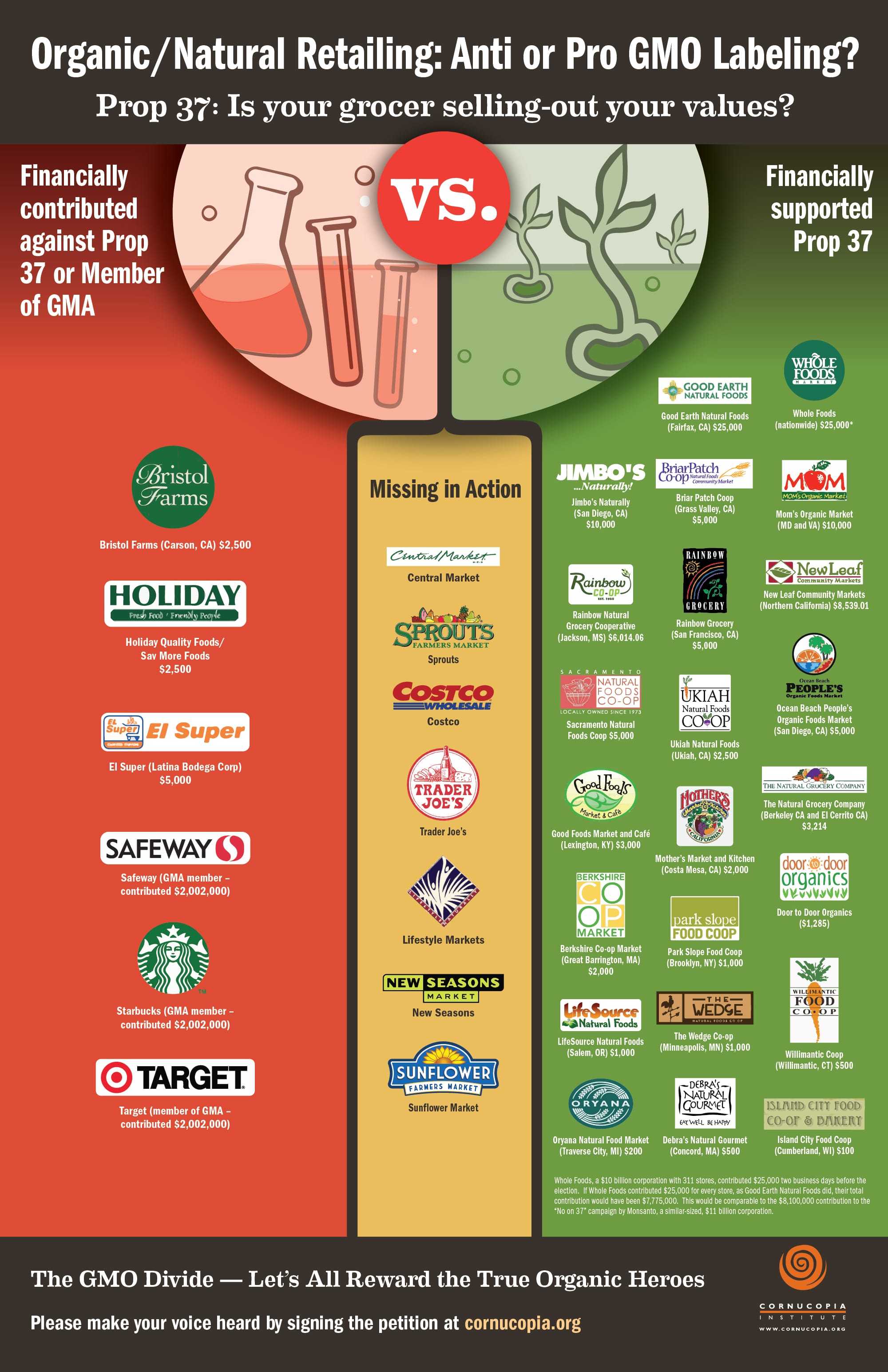
What companies opposed or supported Prop 37 (GMO labelling)
The Cornucopia Institute put together a great visual of the corporations and grocers that didn't support Proposition 37 (are against labelling GMOs), and those that did.
Which companies will you support?


Which companies will you support?

Saturday, 7 July 2012
The ethics of what we eat
 "In the United States somewhere between 20 and 40 million birds and mammals are killed for research each year. That may seem like a lot- and it far exceed the number of animals killed for their fur, let alone the relatively tiny number used in circuses-but even the figure of 40 million represents less than two days’ toll in America’s slaughterhouses, which kill around 10 billion each year."
Peter Singer- The Ethics of What we Eat
Monday, 16 April 2012
Ottawa gets its own Food Action Plan. Have your say

Toronto's Health-Focused Food Strategy
Two years ago ‘Cultivating Food Connections: Toward a Healthy and Sustainable Food System for Toronto’ was published. The report was the next stage of the Toronto Food Strategy, developed in large part by the Toronto Food Policy Council, and proposed a new vision for the food system; a health-focused one that would become part of the city’s policies and programs.
This health-focused food system is one that:
•Fosters food-friendly neighbourhoods
•Promotes social justice
•Supports nutrition and disease prevention
•Builds strong communities
•Creates local, diverse and green economic development
•Protects and sustains the environment
•Empowers people with food skills and information
•Nourishes links between city and countryside
Here are the differences between the existing food system and the one proposed in the report:
•Fosters food-friendly neighbourhoods
•Promotes social justice
•Supports nutrition and disease prevention
•Builds strong communities
•Creates local, diverse and green economic development
•Protects and sustains the environment
•Empowers people with food skills and information
•Nourishes links between city and countryside
Here are the differences between the existing food system and the one proposed in the report:

Rather than compete with city priorities and resources, the new proposed food system uses
food activities to help meet Toronto’s ongoing goals.
The report proposed six priority areas for action:
1. Support Food Friendly Neighbourhoods
2. Make Food a Centerpiece of Toronto’s New Green Economy
3. Eliminate Hunger in Toronto
4. Connect City and Countryside through Food
5. Empower Residents with Food Skills and Information
6. Urge Federal and Provincial Governments to Establish
Health-Focused Food Policies
Ottawa’s Food Action Plan: Get involved!

Toronto is just one of the forward-thinking cities addressing food issues, joining New York, San Francisco, the United Kingdom, and now Ottawa.
Food for All is a 2-year project led by Just Food that aims to develop a community-driven food action plan that involves:
-Food insecurity and health
-Physical access to food (incl.: food retail environments, food deserts, transportation, etc.)
-Food access in schools
-Food production in urban areas
-Food production in rural areas
The Action Plan has 14 components, listed below, that you can read and comment on... but hurry! We only have until Sunday April 22nd to provide online feedback:
Toward a Breastfeeding Friendly Ottawa
Healthy School Food Environments in Ottawa
Income and the Cost of Eating
Community Programming for Food Security, Food Education & Awareness
Access to Food: Planning and Zoning
OC Transpo and Food Access
Edible Landscapes
Community Gardening and Urban Agriculture on NCC Lands
Healthy Corner Stores
Community Gardening on Private Land and City of Ottawa Land
Prevention, Identification and Remediation of Soil Contamination
Hens in Urban Areas
Bees in Urban Areas
A Food Policy Council for Ottawa
-Physical access to food (incl.: food retail environments, food deserts, transportation, etc.)
-Food access in schools
-Food production in urban areas
-Food production in rural areas
The Action Plan has 14 components, listed below, that you can read and comment on... but hurry! We only have until Sunday April 22nd to provide online feedback:
Toward a Breastfeeding Friendly Ottawa
Healthy School Food Environments in Ottawa
Income and the Cost of Eating
Community Programming for Food Security, Food Education & Awareness
Access to Food: Planning and Zoning
OC Transpo and Food Access
Edible Landscapes
Community Gardening and Urban Agriculture on NCC Lands
Healthy Corner Stores
Community Gardening on Private Land and City of Ottawa Land
Prevention, Identification and Remediation of Soil Contamination
Hens in Urban Areas
Bees in Urban Areas
A Food Policy Council for Ottawa
Saturday, 10 March 2012
Slacktivism and social change
For the past few months my brain has been on a bit of a vacation... that’s what it feels like anyways. I’m drawn to chick-lits over books on current affairs, romantic comedies over documentaries, and knitting over blogging. When I do blog, they’re not always my own thoughts. I post video clips that interest me, links to online petitions for causes I believe in, or re-write other people’s point of views I agree with... without necessarily looking critically into the issues or organizations.

I’m really not proud of this but, on some level, I guess I feel like I’m raising awareness or adding my voice to an issue I think is relevant.
Slacktivism, defined by Wikipedia, describes "feel-good" measures, in support of an issue or social cause, that have little or no practical effect other than to make the person doing it feel satisfaction... The underlying assumption being promoted by the term is that these low cost efforts substitute for more
substantive actions rather than supplementing them.
This Wiki page includes criticism and defenses of slacktivism. One of the critics they cite is Malcolm Gladwell. In his New Yorker article, Gladwell argues that “activism that challenges the status quo—that attacks deeply rooted problems—is not for the faint of heart.” This “high-risk activism”, he says, is often built around strong personal ties.
For example, the volunteers for the 1964 Mississippi Freedom Summer Project – three of which were killed and many others beaten or arrested - who stayed with the project despite the risks also had friends that stayed. The Greensboro Four who staged the sit-in at the “whites only” lunch counter of Woolworth’s in 1960 were all close friends. In contrast, he states that social media is based on weak ties and rarely leads to high-risk activism. He writes that these tools are great to get people involved when there’s very little for them to do (like “liking” a page or signing a petition). “Facebook activism succeeds not by motivating people to make a real sacrifice but by  motivating them to do the things that people do when they are not motivated enough to make a real sacrifice”.
 motivating them to do the things that people do when they are not motivated enough to make a real sacrifice”.
Gladwell also contends that to successfully take on a powerful, organized establishment, activist efforts need to be organized around a hierarchical organization with rules and procedures, and controlled by a single central authority. Social media is not hierarchical but rather builds networks bound by loose ties, where decisions are made through consensus. “The instruments of social media are well suited to making the existing social order more efficient. They are not a natural enemy of the status quo”.
Because there is no clear authority, Gladwell states that networks have difficulty reaching consensus and setting goals. “They can’t think strategically; they are chronically prone to conflict and error. How do you make difficult choices about tactics or strategy or philosophical direction when everyone has an equal say?”
In contrast, social activist Grace Lee Boggs advises that as we look forward to the social changes that she sees are upon us, we need to rethink the concept of leaders. She stated that leader implies power, and we must embrace the idea that we are the leaders we've been looking for.
 Was she foreshadowing the Occupy movement? This movement defines itself as “a people-powered movement” that uses “a non-binding consensus based collective decision making tool known as a ‘people's assembly’”. The movement has been lambasted by many for not having a clear agenda (although, according to Naomi Wolf, this might have been part of a coordinated smear campaign against the movement organized at a very high national level. She reported that they in fact have a clear agenda).
 Wayne Roberts - Canadian food policy analyst and writer- defended the Occupy movement which, in his opinion, is based on the same principles as the city-based food movement:
In the interconnected and webbed world created by the Internet, platform-providing, rather than content-promoting, organizations have come to the fore...As social movements catch up, community-based power will gravitate toward organizations featuring platforms, portals and places, rather than specific content—which is why the people who lament the lack of content in various occupations are out of it. Platforms are about opening discussions, not closing them and about providing options not mutually exclusive options.
He goes on to point out that the majority of grassroots food organizations have been platform-based, rather than content-specific. Organizations don’t focus on specific pre-defined issues, but “serve as forums for discussion, and hosts of initiatives and experiments.”
A few days ago, the organization Invisible Children released their latest campaign video calling for the arrest of Joseph Kony – head of the Ugandan Lord’s Resistance Army and most wanted man on the list of the International Criminal Court for his atrocious war crimes- by the end of 2012. The much-watched video is a lesson on how to use social media to motivate young people to ‘action’, using a great narrative, cool music and, maybe most importantly, targeting celebrities (and policy makers). The video ends with their call to ‘action’:
1. Sign the pledge to show your support
2. Get the bracelet and the action kit (posters, stickers)
3. Sign up to donate a few dollars a month and join their army for peace
4. Above all, share their movie.
No high-risk a
 ctivism here.
 While nobody is really questioning Invisible Children’s motives or that Kony should answer for his crimes, the organization has been highly criticized (click here, here or here) for a number of reasons including, but not limited to: its misuse of money (the majority of which seems to have been used for its own marketing), its support for the corrupt Ugandan army- despite the fact that Kony is currently in the Democratic Republic of Congo, its oversimplification of the situation in Uganda, its neo-colonialist ‘solution’ of calling for the ‘White Americans’ to save the Africans.
Ugandan Journalist Rosebell Kagumire wrote:
The film is void of any means like peace efforts that have gone on and it simplifies the war to Joseph Kony — a mad evil man. This war was bigger than Joseph Kony and those who will end it won’t be Americans. It’s a complex war that requires African governments  of Uganda, South Sudan, Democratic Republic of Congo and Central
 of Uganda, South Sudan, Democratic Republic of Congo and Central
African Republic to work together to pacify the region... All in all it’s a very imperialistic film trying to touch sentiments of those who can ‘save’ Africa i.e. Hollywood and the West.
I am glad for social media that we are able to watch this kind of work and we react. This kind of condescending attitude towards Africa and its problems shouldn’t be given space in the 21st century.
For her full video commentary, click here.
For her full video commentary, click here.
In an interview, Grant Oysten, 19-year old political science student and one of the first to post his criticism of KONY 2012, stated that he’s alarmed that people took up the cause so readily without looking at the issue more critically. He worries that people will feel like they know everything about the issue after having seen the video. The purpose of his post, he says, was to present arguments against the message propagated by Invisible Children, in order to start a more balanced dialogue.
He writes:
Is awareness good? Yes. But these problems are highly complex, not one-dimensional and, frankly, aren’t of the nature that can be solved by postering, film-making and changing your Facebook profile picture, as hard as that is to swallow. Giving your money and public support to Invisible Children so they can spend it on supporting ill-advised violent intervention and movie #12 isn’t helping. Do I have a better answer? No, I don’t, but that doesn’t mean that you should support KONY 2012 just because it’s something. Something isn’t always better than nothing. Sometimes it’s worse.
Is that true? Is something not always better than nothing?
Canadian journalist at the CBC, Evan Solomon, questions the KONY 2012 backlash, asking if this is a case of the perfect getting in the way of the good. He states that KONY 2012 is not policy, but a polemic (a form of dispute, wherein the main efforts of the disputing parties are aimed at establishing the superiority of their own points of view regarding an issue) and that the mainstream media should ha
 ve the courage to admit that none of us would be talking about Kony without this video. “Whats wrong with Justin Bieber telling kids to stop a killer?,” he asks.
He contends that critics are missing the bigger political implication: “can foreign policy be driven by social media and youth activism? Is it smart politics or dumbed-down do-goodism?”
***
My take home message comes from social activist Grace Lee Boggs on what it takes for change to happen:
“It takes a whole lot of things. It takes people doing things. It takes people talking about things. It takes dialogue. It takes a change in the way we think”.
Tuesday, 21 February 2012
Saturday, 18 February 2012
Occupy the Food System
 In December, Willie Nelson, President of Farm Aid, wrote an amazing piece for the Huffington Post. In it, he points out how concentrated the agricultural market is- a very small number of firms control the majority of the market, threatening competition and resulting in market abuses:
 93% of soybeans and 80% of corn grown in the United States are under the control of Monsanto; four companies control up to 90% of the global trade in grain; 3 companies process more than 70% of beef in the U.S.; 4 companies dominate close to 60 % of the pork and chicken markets.
Nelson gives example of the power these large corporations have, overturning GIPSA in the US - proposed fair market contract rules under Grain Inspection, Packers and Stockyards Administration that would have made it illegal for packers and slaughter houses to unfairly discriminate against independent farmers - and using $5.6 million in lobbying costs to overturn US Department of Agriculture rules that would have changed the standards for school lunches to reduce the amounts of starch and sodium and increase the amounts of fresh fruits and vegetables.He ends:
Despite all they're up against, family farmers persevere. Each and every day they work to sustain a better alternative -- an agricultural system that guarantees farmers a fair living, strengthens our communities, protects our natural resources and delivers good food for all. Nothing is more important than the food we eat and the family farmers who grow it. Corporate control of our food system has led to the loss of millions of family farmers, destruction of our soil, pollution of our water and health epidemics of obesity and diabetes.
We simply can't afford it. Our food system belongs in the hands of many family farmers, not under the control of a handful of corporations.
"We are farmers, we grow food for the people"
 In March 2011, the Public Patent Foundation filed the landmark lawsuit, Organic Seed Growers and Trade Association (OSGATA) et al v. Monsanto on behalf of family farmers, seed businesses and farming organizations to challenge Monsanto’s patents on genetically modified (GMO) seeds and protect farmers from the biotech seed and chemical giant’s abusive patent infringement lawsuits.
At the heart of the lawsuit is the threat that farmers face due to genetic trespass as a result of Monsanto’s GMO seed and the aggressive enforcement of their alleged patent rights.
I stand with Farmers vs. Monsanto
After hearing the arguments, Judge Naomi Buckwald stated that on March 31st she will hand down her decision on whether the lawsuit will move forward to trial.
For more information and how to get involved, visit Food Democracy Now!
Willie Nelson teamed up with Chipotle to release this ad against factory farming and for sustainable agriculture. Download the song from itunes- proceeds go to the Chipotle Cultivate Foundation.
Saturday, 15 October 2011
Wednesday, 9 February 2011
Is the American Dietetic Association Dropping its Corporate Sponsors?


Monday, 1 November 2010
Starved for Attention
 A friend of mine, Dr. Umang Sharma, brought this great campaign to my attention... thanks Umang!
This year, an astonishing 195 million children worldwide will suffer from the effects of malnutrition; 90% of them live in sub-Saharan Africa and South Asia.
Malnutrition contributes to at least 1/3 of the 8 million annual deaths of children under 5 years of age.
According to the international medical humanitarian organization Doctors Without Borders/Médecins Sans Frontières (MSF), without essential nutrients 9 children will continue to die every minute of causes related to malnutrition.
MSF, along with the VII Photo agency, launched “Starved for Attention” in June, a global multimedia campaign presenting a unique and new perspective of childhood malnutrition.
Through a seven-part mini-documentary series that seamlessly blends photography and video, the campaign aims to rewrite the story of malnutrition.
Photojournalists traveled to malnutrition “hotspots” around the world - including India, Bangladesh, Mexico, Burkina Faso, Djibouti, Democratic Republic of the Congo, and the United States - to shed light on the underlying causes of the malnutrition crisis and innovative approaches to combat this condition.
Currently, international donors - in particularly those making the largest humanitarian contributions to food assistance projects - are currently providing substandard foods like cereal-based fortified flours. While these foods can relieve hunger, they don't meet basic nutritional standards for infants and young children, a reality highlighted by the fact that none of these cereals are used in nutrition programs in the donors' own countries.
To end this double standard, you can sign the petition “Overcoming Childhood Malnutrition: The Time to Act is Now” on starvedforattention.org.
The time to act is now.

Thursday, 2 September 2010
Beyond Food Miles
The New York Times recently ran an Op-Ed piece that almost seems to disparage the local food movement. Contributor Stephen Budiansky states:
"...the local food movement n ow threatens to devolve into another one of those self-indulgent — and self-defeating — do-gooder dogmas. Arbitrary rules, without any real scientific basis, are repeated as gospel by “locavores,” celebrity chefs and mainstream environmental organizations. Words like “sustainability” and “food-miles” are thrown around without any clear understanding of the larger picture of energy and land use".
Not long ago I wrote a blog post entitled 'Do Locavores Have it Wrong?' in which I reviewed James McWilliams' main points from his book 'Just Food: Where locavores get it wrong and how we can truly eat responsibly'. These points are pretty much the same as Budiansky's- mainly that we have to look beyond food miles to move towards a sustainable food system.
I agree.
I just don't agree with statements like that of the Center for Consumer Freedom: "Someone should tell the “locavores,” who encourage people to buy food from the closest sources possible - like farmers markets and community supported agriculture (CSA) programs (that buying something grown halfway around the world can be more eco-friendly than buying something grown just a county or two away)".
Local Food Systems ( LFS) have been found to be effective means to achieve food sovereignty- the right of people to local, healthy and ecological food production, realized in equitable conditions that respect the rights to decent working conditions and incomes- CSAs and Farmer's Markets are examples of such LFSs. That said, it is now understood that to achieve this vision, LFSs must go beyond food miles (See Figure 1.0).
A Few Facts:
A globalized food system
-Under the 1997 Kyoto Protocol, 37 industrialized countries, including Canada, agreed to reduce greenhouse gas (GHG) emissions by 5.2% from 1990 levels. As of 2007, Canada's emissions were 26% above 1990 levels, and continue to rise, making this country one of the top 10 global polluters.
-Transportation accounts for 25% of Canada’s GHG emissions, more than any other sector of the economy. About 30-40% of road cargo moves food (a UK stat- data lacking for Canada)
-Between 1968 and 1998, world food trade increased by 184%, with the majority of food trade occurring between countries of similar environments, resulting in the same food items merely being swapped. For example, in 2005, Ontario exported $69 Million, and imported $17 Million, in fresh tomatoes.
-Rather than selling to local retailers, farmers sell into a complex system wherein food is usually shipped hundreds of kilometres to centralized processing plants, only to potentially be sold in a supermarket close to the product’s point of origin.
-In the US and Canada, food typically travels between 2,500 and 4,000 km from farm to plate, up 25% since 1980.
- Using imported versus local ingredients generates four times the GHG emissions; one study found that replacing imports of 58 common food items with local counterparts would be the equivalent to taking 16,191 cars off the road.
Local Food Systems (LFS)
In response to this globalized food sourcing system, concerns about the environments, and a decreased confidence in the agri-food industry (due to outbreaks, GMOs, etc.), there has been a surge of LFS initiatives- Canada is home to over 2300, the top four of which are:
31.3%- Restaurant and chef initiatives serving local food
24.9%- Farmers’ markets generating $1.03 billion in sales
15.3%- Retail grocery stores sourcing local foods
12.8%- Community Supported Agriculture (CSA)
More Facts (some of these points are mentioned in Budiansky's article).
-It is true that foods traveling a shorter distance will not necessarily have less of an environmental impact; mode of transportation, size of vehicle and economies of scale (how much can be moved at once) must be considered.
For example, air transportation produces the most GHG emissions, followed by road (small-sized vehicle), road (truck), rail, and water.
That means that food transported by water could travel seven times farther than food transported by road (truck) and release less GHG
OR
a unit of food delivered by tractor trailer from California to Ontario may require less fuel than if delivered within a 100-mile radius in a small pick-up truck.
Studies show that food systems that integrate bulk deliveries of sustainable produce are more environmentally friendly than options such as farmers’ markets, requiring a greater number of small-sized vehicles (See figure 1.0 above).
-It is also true that a focus on food miles ignores energy use at other stages in the food system.
Transportation accounts for 11% of energy use, but agricultural production and processing account for 83%- this includes things like water use, harvesting techniques, type of fuel used etc. That's why it was found that it's more energy efficient to ship grass-fed lamb raised in New Zealand’s by boat to Britain than transporting local grain-fed amb within Britain, or to import tomatoes from Spain to the UK than to produce them in heated greenhouses in the UK off-season.
What Does this all Mean?
-We need to continue to support our local farmers by buying from farmer's markets and CSAs.
Despite the growth of LFS initi atives, farm incomes have continued to fall, dropping 24% between 1988 and 2002. The average Ontario farmer earns just over $8,000 a year, while production costs continue to rise.
Farmers can realize a 40-80% increase in return by marketing through LFSs by capturing more of the value added normally captured by agri-business.
Money spent locally has also been shown to boost local economy- one study found that a 20% increase in local food purchasing would generate $500M worth of economic activity, enough to stimulate 10,000 new jobs.
-Driving more than 10km (6 miles) to a farmer's market is probably not the most environmentally-friendly activity. We need to ask our local grocers to source locally-grown products.
What's Happening?
Because of this kind of discussion, researchers from theLeopold Center for Sustainable Agriculture have proposed the use of food “eco-labels” on foods that will give consumers more information than just point of production, but include information on both food miles and CO2 emissions.
These labels are appearing on supermarket and menu items in the UK (labels also include compliance to animal welfare standards), Australia, Japan, Taiwan, and Sweden.
The Swedish National Food Administration is even developing dietary guidelines that give equal weight to climate and health! They expect a 20-50% reduction in the nation’s emissions from food production as a result.
While critics point out that eco-labelling alone will not fight climate change, it will encourage the food industry and farmers to adopt carbon-reducing strategies.
In Toron to, there's a Non-Governmental Organization called Local Food Plus (LFP) that is doing amazing work. They have developed certification criteria that go beyond local to include sustainable production methods, soil and water conservation, worker welfare, humane animal handling, protection of biodiversity, and on-farm energy use.
They work with farmers, encouraging sustainable farming practices, and organizations & grocery stores, encouraging them to source locally. Because of them, the University of Toronto- the largest Canadian University- became the first university on the continent to formally commit to purchasing local sustainable food for their cafeterias and residences.
Great things are happening...!
"...the local food movement n
 ow threatens to devolve into another one of those self-indulgent — and self-defeating — do-gooder dogmas. Arbitrary rules, without any real scientific basis, are repeated as gospel by “locavores,” celebrity chefs and mainstream environmental organizations. Words like “sustainability” and “food-miles” are thrown around without any clear understanding of the larger picture of energy and land use".
Not long ago I wrote a blog post entitled 'Do Locavores Have it Wrong?' in which I reviewed James McWilliams' main points from his book 'Just Food: Where locavores get it wrong and how we can truly eat responsibly'. These points are pretty much the same as Budiansky's- mainly that we have to look beyond food miles to move towards a sustainable food system.
I agree.
I just don't agree with statements like that of the Center for Consumer Freedom: "Someone should tell the “locavores,” who encourage people to buy food from the closest sources possible - like farmers markets and community supported agriculture (CSA) programs (that buying something grown halfway around the world can be more eco-friendly than buying something grown just a county or two away)".
Local Food Systems (
 LFS) have been found to be effective means to achieve food sovereignty- the right of people to local, healthy and ecological food production, realized in equitable conditions that respect the rights to decent working conditions and incomes- CSAs and Farmer's Markets are examples of such LFSs. That said, it is now understood that to achieve this vision, LFSs must go beyond food miles (See Figure 1.0).
A Few Facts:
A globalized food system
-Under the 1997 Kyoto Protocol, 37 industrialized countries, including Canada, agreed to reduce greenhouse gas (GHG) emissions by 5.2% from 1990 levels. As of 2007, Canada's emissions were 26% above 1990 levels, and continue to rise, making this country one of the top 10 global polluters.
-Transportation accounts for 25% of Canada’s GHG emissions, more than any other sector of the economy. About 30-40% of road cargo moves food (a UK stat- data lacking for Canada)
-Between 1968 and 1998, world food trade increased by 184%, with the majority of food trade occurring between countries of similar environments, resulting in the same food items merely being swapped. For example, in 2005, Ontario exported $69 Million, and imported $17 Million, in fresh tomatoes.
-Rather than selling to local retailers, farmers sell into a complex system wherein food is usually shipped hundreds of kilometres to centralized processing plants, only to potentially be sold in a supermarket close to the product’s point of origin.
-In the US and Canada, food typically travels between 2,500 and 4,000 km from farm to plate, up 25% since 1980.
- Using imported versus local ingredients generates four times the GHG emissions; one study found that replacing imports of 58 common food items with local counterparts would be the equivalent to taking 16,191 cars off the road.
Local Food Systems (LFS)
In response to this globalized food sourcing system, concerns about the environments, and a decreased confidence in the agri-food industry (due to outbreaks, GMOs, etc.), there has been a surge of LFS initiatives- Canada is home to over 2300, the top four of which are:
31.3%- Restaurant and chef initiatives serving local food
24.9%- Farmers’ markets generating $1.03 billion in sales
15.3%- Retail grocery stores sourcing local foods
12.8%- Community Supported Agriculture (CSA)
More Facts (some of these points are mentioned in Budiansky's article).
-It is true that foods traveling a shorter distance will not necessarily have less of an environmental impact; mode of transportation, size of vehicle and economies of scale (how much can be moved at once) must be considered.
For example, air transportation produces the most GHG emissions, followed by road (small-sized vehicle), road (truck), rail, and water.
That means that food transported by water could travel seven times farther than food transported by road (truck) and release less GHG
OR
a unit of food delivered by tractor trailer from California to Ontario may require less fuel than if delivered within a 100-mile radius in a small pick-up truck.
Studies show that food systems that integrate bulk deliveries of sustainable produce are more environmentally friendly than options such as farmers’ markets, requiring a greater number of small-sized vehicles (See figure 1.0 above).
-It is also true that a focus on food miles ignores energy use at other stages in the food system.
Transportation accounts for 11% of energy use, but agricultural production and processing account for 83%- this includes things like water use, harvesting techniques, type of fuel used etc. That's why it was found that it's more energy efficient to ship grass-fed lamb raised in New Zealand’s by boat to Britain than transporting local grain-fed amb within Britain, or to import tomatoes from Spain to the UK than to produce them in heated greenhouses in the UK off-season.
What Does this all Mean?
-We need to continue to support our local farmers by buying from farmer's markets and CSAs.
Despite the growth of LFS initi
 atives, farm incomes have continued to fall, dropping 24% between 1988 and 2002. The average Ontario farmer earns just over $8,000 a year, while production costs continue to rise.
Farmers can realize a 40-80% increase in return by marketing through LFSs by capturing more of the value added normally captured by agri-business.
Money spent locally has also been shown to boost local economy- one study found that a 20% increase in local food purchasing would generate $500M worth of economic activity, enough to stimulate 10,000 new jobs.
-Driving more than 10km (6 miles) to a farmer's market is probably not the most environmentally-friendly activity. We need to ask our local grocers to source locally-grown products.
What's Happening?
Because of this kind of discussion, researchers from the
These labels are appearing on supermarket and menu items in the UK (labels also include compliance to animal welfare standards), Australia, Japan, Taiwan, and Sweden.
The Swedish National Food Administration is even developing dietary guidelines that give equal weight to climate and health! They expect a 20-50% reduction in the nation’s emissions from food production as a result.
While critics point out that eco-labelling alone will not fight climate change, it will encourage the food industry and farmers to adopt carbon-reducing strategies.
In Toron
 to, there's a Non-Governmental Organization called Local Food Plus (LFP) that is doing amazing work. They have developed certification criteria that go beyond local to include sustainable production methods, soil and water conservation, worker welfare, humane animal handling, protection of biodiversity, and on-farm energy use.
They work with farmers, encouraging sustainable farming practices, and organizations & grocery stores, encouraging them to source locally. Because of them, the University of Toronto- the largest Canadian University- became the first university on the continent to formally commit to purchasing local sustainable food for their cafeterias and residences.
Great things are happening...!
Wednesday, 25 August 2010
Fresh: The documentary
Fresh is a new documentary examining the consequences of our industrial food system, and offering practical alternatives... Looks like a good one!
Click here to find a screening near you... or to find out how you can host a screening!
If you're in Toronto- there's a screening tomorrow, followed by a panel discussion with some of the leading food activists in the Toronto area! Click here or here for more information on that.
Thursday, 19 August 2010
Seeds of Hope: We are the leaders we've been looking for
In the clip below, Grace Lee Boggs, author and activist, talks about change.
While she states that our planet is currently facing a serious time of uncertainty, she sees hope, and a movement emerging where, instead of people complaining about things, they're doing something about it.
She gives the example of Will Allen, former basketball player and current urban farmer, community organizer, writer and activist. Allen puchased a 2-acre piece of land to grow food for a community. According to Boggs, growing our own food provides a way for young people to relate to the earth, their elders, and time, in a different way.
In answer to the question often posed, "How do I make a difference?", Boggs says that it should be something local and something real- however small. Even starting a dialogue is doing something.
When asked if there are leaders we can look to, Boggs states that we have to rethink the concept of leaders; leader implies power.
Instead, we need to embrace the idea that we are the leaders we've been looking for.
Inspiring!
While she states that our planet is currently facing a serious time of uncertainty, she sees hope, and a movement emerging where, instead of people complaining about things, they're doing something about it.
She gives the example of Will Allen, former basketball player and current urban farmer, community organizer, writer and activist. Allen puchased a 2-acre piece of land to grow food for a community. According to Boggs, growing our own food provides a way for young people to relate to the earth, their elders, and time, in a different way.
In answer to the question often posed, "How do I make a difference?", Boggs says that it should be something local and something real- however small. Even starting a dialogue is doing something.
When asked if there are leaders we can look to, Boggs states that we have to rethink the concept of leaders; leader implies power.
Instead, we need to embrace the idea that we are the leaders we've been looking for.
Inspiring!
Thursday, 6 May 2010
Dietitians of Canada & its Industry Partners
January 2013- Note- this post has broken links- see update below.
Dietitians of Canada (DC) is the "national voice of dietitians" and states that it is "the most trusted source of information on food and nutrition for Canadians". However, did you know that DC partners with industry, including Coca-Cola, McDonald's, Monsanto, Nestle, pharmaceutical industry, supplement industry (e.g., Centrum), etc etc. (The American Dietetic Association does as well).
Huh?!
How does this affect DC's message? How does this make dietitians look? Do you think they can be unbiased and critique the food industry, if they're getting money from it?
I decided to write a letter to voice my concern- (it was also an assignment!). I'd love to know what you think!
btw- I was inspired by American dietitian, Marion Nestle's, call to ADA members.
Dear Dietitians of Canada CEO and Board of Directors,
As a new Dietitians of Canada (DC) member, I am surprised by, and cannot condone, this organization’s long history of partnering itself with food, beverage, and pharmaceutical industries - regardless of the nutritional quality of their products, their history, or stated goals. DC professes itself to be “the most trusted source of information on food and nutrition for Canadians,” but these partnerships put into question this trustworthiness, the integrity of DC’s messages and research, as well as my own credibility as a member. I ask that you review your advertisement and sponsorship policies to recognize, and minimize, the many conflicts of interest that arise due to these alliances.
-The Montreal 2010 DC national conference program acknowledges numerous industry sponsors, many with commercial interest in the topics discussed:
- The Centrum Foundation is sponsoring ‘Prenatal Nutrition Guidelines,’ which includes the new recommendations for iron, folate, and omega-3 fatty acids;
- Lallemand Institut Rosell, producer of yeast and bacteria, is sponsoring ‘The Role of Microbiota in Medical Nutrition Therapy’;
- Campbell Company of Canada, with its line of gluten-free products, is sponsoring ‘The Gluten-Free Boom: Challenges and Opportunities’.
-As part of DC’s mission to support “ethical, evidence-based best practice in dietetics,” the Canadian Foundation for Dietetic Research (CFDR) was created. However, it becomes impossible to distinguish between independent evidence-based research and corporate involvement:
Five of the 11 CFDR Board of Directors are employed by industry groups Nestlé, Kraft, Compass Group Canada, Unilever, and Dairy Farmers of Canada.
CFDR’s 2009 Annual Report disclosed that it received over $220,000 from more than 20 corporations, including $75,000 from The Centrum Foundation and Wyeth Consumer Health Care Inc. Two of the seven research grants awarded by CFDR in 2009 were directly linked to supplementation:
‘How can all Canadian infants get the Vitamin D needed for optimal health?’ “examines how children of vegetarian parents can get the vitamin D they need through supplementation...”
‘Can thiamin supplementation help patients with heart failure?’ aims to “determine an effective dose of thiamin supplementation that will restore red blood cell thiamin levels, leading to better health for patients with heart failure.”
Centrum was also a benefactor in 2008, when CFDR featured a special collaborative research project
There are different sources of conflicts of interest in research, but financial conflicts of interest have been found to consistently produce a bias.
-A 2009 Ipsos Reid survey, done on behalf of DC and its partner, Dairy Farmers of Canada, sought to provide an informal 24-hour recall of over 2000 Canadians. Two of the four conclusions drawn included the mention of dairy products: “A significant number of Canadian adults had not consumed any milk and alternatives or any vegetables and fruit on the day prior to the survey...,” and “A majority of Canadian adults are not aware of the many health benefits of milk and alternatives....”
Corporate sponsorship is pervasive in the field of nutrition. Individuals and organizations engaged in such partnerships justify them in terms of advancing research and bettering the public’s health, maintaining that the relationships do not forfeit integrity; however, the above examples provide just a sampling of the many conflicts of interest that arise from the collaborations between DC and industry that compromise DC’s, and its members’, credibility. In fact, Health Canada’s Sodium Working Group was recently disparaged by the Center for Science in the Public Interest due to the involvement of DC representative Susan Barr, because of DC’s heavy involvement with industry.
Board of Directors, as long as DC continues to align itself with food, beverage and pharmaceutical industries, and rely on these corporations for funding, it will never be respected, and neither will I. As a member of the purported “nation-wide voice of dietitians,” I hope my voice, and my concerns, are heard, and that DC will carefully review its advertising and sponsorship policies to recognize the many conflicts of interest that exist, and their consequences, and take steps to minimize them in order to restore DC’s credibility. These steps may include, but are not limited to, beginning a conversation with members with regards to this issue, increasing transparency of use of corporate funds, being much more selective in choosing which companies to enter into partnerships with, and ensuring DC and CFDR Board Members have no corporate ties.
I look forward to hearing about the steps that will be undertaken in this important matter.
Thank you for your time.
Sybil
Feel as strongly as me?
To have your voice heard, copy and paste the paragraph below – feel free to personalize it - and send it to Marsha Sharp, the Chief Executive Officer of Dietitians of Canada ( msharp@dietitians.ca )
and to the member of the Board of Directors of your area, if your a member of DC:
Matthew Durant, Atlantic, matthew.durant@acadiau.ca
Barbara Khouzam, Quebec, North-East and Eastern Ontario, bkhouzam@uottawa.ca
Kerry Grady-Vincent, Central and Southern Ontario (email NA publicly).
Rosemary Szabadka, Saskatchewan, Manitoba and North Western Ontario, RSzabadka@wrha.mb.ca
Maureen Elhatton, Alberta and the Territories (email NA publicly)
Heather McColl, British Columbia (email NA publicly)
As well, cc. Georgette Harris, the front-line contact on sponsorship and advertising (gharris@dietitians.ca ).
and/OR by clicking here.

Dear DC CEO and Board of Directors,
I would like to express my concern towards the many partnerships DC has with food, beverage and pharmaceutical companies. These alliances, and reliance on their funding, gives the appearance of support, encourages perceptions that sponsorship prevents DC from criticizing the food industry, and makes it impossible for DC to be a trustworthy source of information for Canadians; by extension, as a DC member, I cannot be a credible source of information, or trusted as a professional.
I hope that DC will carefully review its advertising and sponsorship policies to recognize the many existing conflicts of interest, and their consequences, and take steps to minimize them in order to restore DC’s integrity.
I look forward to hearing about the steps that will be undertaken in this important matter.
Other sources:
Gingras, J. (2005). Evoking trust in the nutrition counsellor:why should we be trusted? Journal of Agricultural and Environmental Ethics, 18, 57-7.
Nestle, M. (2001). Food company sponsorship of nutrition research and professional activities: a conflict of interest, Public Health Nutrition, 4(5), 1015-1022.
Lesser, L.I. (2009). Reducing potentital bias in industry-funded nutrition research. American Journal of Clinical Nutrition, 90(3), 699-700.
_____________________
I had not revisited this post in a while and notice that many of the links are broken. Some updated facts :
- The Canadian Foundation for Dietetic Research (CFDR), created to support ethical, evidence-based best practice in dietetics, has a vision of enhancing the health of Canadians by contributing new knowledge about food and nutrition. In 2012, the CFDR received about $200 000 in revenue from corporate "partners". These included the Dairy Farmers of Canada and Nestlé (the two biggest donors, each giving CFDR $125 000 over 5 years), as well as The Centrum Foundation and Pfizer Consumer Health Care Inc., Campbell Company Canada, Compass Group Canada, Kraft Canada Inc., McCain Foods, McDonald's Restaurants of Canada Limited, Unilever Canada Inc, Abbott Nutrition Canada, Aramark Canada Ltd., Canola Council of Canada, Egg Farmers of Canada, General Mills Canada Corporation, Kellogg Canada Inc., Loblaw Companies Limited, Mead Johnson Nutrition, PepsiCo Canada and Sodexo Canada.
- They note: "CFDR is grateful to the many corporate partners and donors who believe in the value of dietetic and nutrition research in building a healthy Canada."
- 8 of the 11 2011/2012 Board members have industry ties.
- I'm having trouble finding the program for the 2012 annual conference. The 2011 DC Ontario Regional conference one shows a breakfast sponsored by Becel and Egg Farmers, a lunch by Unilever, a "special conference memento" courtesy of the Sugar Institute, and industry-sponsored talks.
- Michele Simon's comprehensive report on the Academy of Nutrition and Dietetics' (AND) (formerly the American Dietetic Association) partnerships with industry was just published - And now a word from our sponsors: Are America's nutrition professionals in the pocket of Big Food? A must read.
Subscribe to:
Comments (Atom)